Navigating the world of sales tax can feel like decoding a complex puzzle—especially when you hear terms like ‘destination based sales tax.’ It’s not just jargon; it’s a system shaping how businesses collect and remit taxes across state lines. Let’s break it down in plain terms.
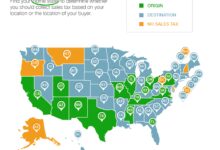
What Is Destination Based Sales Tax?

The concept of destination based sales tax is foundational to understanding modern tax policy in the United States and other countries with similar frameworks. Unlike its counterpart, origin-based taxation, destination based sales tax hinges on where the buyer receives the product or service—not where the seller is located. This distinction has profound implications for e-commerce, state revenue, and interstate commerce.
Core Definition and Mechanics
At its heart, destination based sales tax means that the tax rate applied to a sale is determined by the buyer’s location. If a customer in Texas buys a laptop from a company headquartered in Oregon, the transaction is taxed based on Texas’ local and state sales tax rates. This system aims to level the playing field between local brick-and-mortar stores and online retailers.
- Tax is calculated based on the ship-to address.
- Local, county, and state rates are combined to form the total tax rate.
- Applies to both tangible goods and certain digital services.
This model ensures that consumers pay the same tax whether they shop locally or online, preventing tax arbitrage where buyers might exploit low-tax jurisdictions.
Contrast with Origin-Based Sales Tax
Origin-based sales tax, used in some states like Texas for intrastate transactions, applies the tax rate of the seller’s location. This creates disparities, especially in e-commerce. For example, a seller in a low-tax zone could offer artificially lower prices, distorting competition.
“The destination principle ensures fairness by aligning tax collection with where economic activity occurs,” says the Tax Foundation in a 2023 report on interstate taxation.
Destination based sales tax eliminates this imbalance by ensuring all sellers charge the same rate to customers in a given location, regardless of where the business operates.
Historical Evolution of Destination Based Sales Tax
The shift toward destination based sales tax didn’t happen overnight. It evolved in response to technological change, particularly the rise of e-commerce. Understanding its history reveals how tax policy adapts to economic transformation.
Pre-Internet Era: Local Commerce Dominance
Before the 1990s, most retail was local. Sales tax was straightforward: you bought something in your town, and you paid your town’s tax. States had little incentive to worry about out-of-state sellers because physical presence (nexus) was required to collect tax.
- Supreme Court rulings like Quill Corp. v. North Dakota (1992) reinforced that businesses without physical presence in a state didn’t need to collect sales tax.
- This created a loophole as online shopping began to grow.
- States started losing significant revenue as more consumers bought from out-of-state vendors.
The Quill decision became a cornerstone—but also a growing problem as digital commerce expanded.
The Digital Disruption and State Response
By the 2000s, Amazon and other online giants were thriving, often not collecting sales tax in states where they lacked warehouses or offices. States saw billions in uncollected tax revenue. This led to legislative experiments and pressure for change.
Some states began requiring remote sellers to collect tax if they had affiliate relationships or used drop-shipping models. Others pushed for federal reform. The destination based sales tax model gained traction as a fair way to handle cross-border transactions.
The pivotal moment came in 2018 with the Supreme Court’s decision in South Dakota v. Wayfair, Inc., which overturned Quill and allowed states to require remote sellers to collect sales tax—even without physical presence.
“The physical presence rule is an incorrect interpretation of the Commerce Clause,” wrote Justice Anthony Kennedy in the Wayfair majority opinion.
This ruling effectively legitimized destination based sales tax for remote sales, marking a turning point in U.S. tax policy.
How Destination Based Sales Tax Works in Practice
Understanding the mechanics of destination based sales tax is crucial for businesses, especially those engaged in e-commerce. It’s not just about knowing the rate—it’s about compliance, calculation, and remittance.
Tax Rate Determination by Jurisdiction
Under destination based sales tax, the total tax rate is a composite of several layers: state, county, city, and special district taxes. For example, a purchase in Chicago, Illinois, may be subject to:
- 6.25% Illinois state sales tax
- 1.25% Cook County tax
- 1.25% City of Chicago tax
- 1.0% Metropolitan Pier and Exposition Authority tax
This results in a total rate of 9.75%. Businesses must accurately identify the correct jurisdiction based on the customer’s address. Tools like tax automation software (e.g., Avalara, TaxJar) help companies manage this complexity.
For more details on jurisdictional tax rates, visit the Tax Foundation’s 2023 sales tax map.
Compliance and Filing Requirements
Once a business determines it has nexus in a state (economic or physical), it must register, collect, and remit destination based sales tax. This involves:
- Registering with the state’s Department of Revenue
- Collecting the correct tax at checkout
- Filing regular returns (monthly, quarterly, or annually)
- Auditing records for accuracy
Failure to comply can result in penalties, interest, and back taxes. States like California and New York are particularly aggressive in enforcing remote seller obligations.
The Streamlined Sales Tax Governing Board (SSTGB) was created to simplify this process. Participating states agree to uniform rules and offer certified service providers to help businesses automate tax collection. More information is available at www.sstax.org.
States That Use Destination Based Sales Tax
While most U.S. states have adopted destination based sales tax for remote sales post-Wayfair, the implementation varies. Some states apply it universally, while others use hybrid models.
Full Destination-Based States
States like California, New York, and Florida apply destination based sales tax to all sales, whether intrastate or remote. This means:
- All sellers must charge tax based on the buyer’s location.
- Local tax rates are enforced down to the ZIP+4 level.
- Businesses must stay updated on local tax changes.
California, for instance, requires sellers to use certified automated systems to ensure accuracy in tax calculation.
Hybrid Models: Origin and Destination Mix
Texas and Virginia use a hybrid approach. For intrastate sales, they apply origin-based rules (seller’s location), but for remote sales, they switch to destination based sales tax. This creates complexity for businesses operating within the state.
For example, a Dallas-based company selling to a customer in Austin would charge Dallas rates for local deliveries but Austin rates for online orders shipped there. This dual system demands careful tracking and system configuration.
“Hybrid models reflect transitional policies as states adapt to e-commerce realities,” notes the National Conference of State Legislatures (NCSL).
More on state-specific rules can be found at NCSL’s sales tax resource page.
Impact on E-Commerce and Small Businesses
The rise of destination based sales tax has transformed how online businesses operate. While it promotes fairness, it also introduces administrative burdens—especially for small and medium-sized enterprises (SMEs).
Leveling the Playing Field
One of the biggest benefits of destination based sales tax is that it creates a fair competitive environment. Before Wayfair, local retailers had to charge sales tax while online sellers often didn’t, giving the latter a 5–10% price advantage.
- Now, both local and remote sellers must collect tax.
- Consumers no longer have an incentive to buy out-of-state to avoid tax.
- Brick-and-mortar stores regain competitiveness.
This shift supports local economies and ensures that public services funded by sales tax (like schools and infrastructure) receive their due revenue.
Compliance Challenges for Small Sellers
Despite the fairness, small businesses face real challenges. Managing tax rates across thousands of jurisdictions is daunting. A seller on Etsy or Shopify might ship to all 50 states, each with varying rules and rates.
Key pain points include:
- Constantly changing tax rates and rules
- Lack of in-house tax expertise
- Cost of tax automation software
- Risk of audits and penalties
However, solutions exist. Platforms like Shopify and WooCommerce integrate with tax engines that automatically apply destination based sales tax. The IRS and state agencies also offer guidance for small businesses navigating compliance.
International Perspectives on Destination Based Taxation
The U.S. isn’t alone in adopting destination based principles. Many countries use similar models, especially for value-added tax (VAT) systems. Comparing international approaches reveals best practices and potential pitfalls.
European Union’s VAT Model
The EU mandates destination based taxation for cross-border B2C sales. When a German company sells to a customer in France, the transaction is taxed at French VAT rates.
- Businesses must register for the EU’s OSS (One Stop Shop) scheme.
- VAT is collected and remitted in the customer’s country.
- Simplifies compliance for sellers across 27 member states.
This system reduces tax evasion and ensures member states retain tax revenue from domestic consumption.
Learn more at the European Commission’s VAT OSS portal.
Canada’s Harmonized Sales Tax (HST)
Canada uses a hybrid GST/HST system. Provinces like Ontario and Nova Scotia apply HST (a blend of federal and provincial tax) based on the destination. Remote sellers must collect HST if their revenue exceeds $30,000 annually.
The Canada Revenue Agency (CRA) requires non-resident sellers to register and collect tax on digital goods sold to Canadian consumers—a move aligned with global trends.
“Destination-based taxation is the future of fair consumption tax systems,” states the OECD in its 2021 report on digital taxation.
More details at CRA’s GST/HST guide.
Future Trends and Technological Integration
As commerce evolves, so too will destination based sales tax. Emerging technologies and policy shifts are shaping the next phase of tax collection and compliance.
AI and Automation in Tax Compliance
Artificial intelligence is revolutionizing how businesses handle destination based sales tax. AI-powered platforms can:
- Instantly identify the correct tax jurisdiction
- Update rates in real-time as laws change
- Predict audit risks based on filing history
- Generate compliance reports automatically
Companies like Vertex and Sovos are leading this space, offering cloud-based solutions that integrate with ERP and e-commerce platforms.
Potential for Federal Sales Tax Legislation
Currently, the U.S. lacks a federal sales tax, leaving states to manage their own systems. However, there’s growing discussion about creating a national framework to simplify destination based sales tax.
Possible reforms include:
- A federal mandate for uniform tax rate databases
- Standardized definitions of nexus
- Federal oversight of interstate tax disputes
While politically challenging, such a system could reduce compliance costs and increase fairness across state lines.
Common Misconceptions About Destination Based Sales Tax
Despite its growing importance, destination based sales tax is often misunderstood. Clarifying these myths is essential for informed business decisions and public discourse.
Myth: It Only Applies to Big Companies
Many small business owners believe destination based sales tax is only a concern for Amazon or Walmart. In reality, economic nexus laws mean even a small online store with $100,000 in sales or 200 transactions in a state may be required to collect tax.
For example, South Dakota’s threshold is $100,000 in sales or 200 transactions—easily reached by niche e-commerce sites.
Myth: It’s the Same as Use Tax
While related, destination based sales tax and use tax are not identical. Sales tax is collected by the seller; use tax is paid by the buyer when sales tax wasn’t collected (e.g., buying from an out-of-state vendor).
- Destination based sales tax shifts the burden to the seller.
- Use tax compliance is historically low (around 20%).
- Wayfair improved collection by enforcing seller responsibility.
States now rely on destination based sales tax to replace inefficient use tax systems.
Strategies for Businesses to Stay Compliant
Compliance with destination based sales tax isn’t optional—it’s a legal requirement. But with the right strategies, businesses can manage it efficiently and avoid costly mistakes.
Leverage Tax Automation Software
Manual tax calculation is error-prone and unsustainable. Automation tools like Avalara, TaxJar, and Vertex offer:
- Real-time tax rate lookup
- Integration with Shopify, WooCommerce, and QuickBooks
- Automatic return filing
- Audit defense support
These platforms reduce the risk of underpayment and save hundreds of hours annually.
Conduct Regular Nexus Reviews
Nexus isn’t static. A business might establish economic nexus simply by running targeted ads in a state or using fulfillment by Amazon (FBA). Regular reviews help avoid surprise liabilities.
Steps to take:
- Monitor sales volume and transaction count per state
- Track physical presence (warehouses, employees, events)
- Consult with a tax professional annually
Proactive management prevents retroactive tax assessments.
What is destination based sales tax?
Destination based sales tax is a system where the tax on a sale is determined by the buyer’s location, not the seller’s. It ensures that consumers pay the local tax rate regardless of where the business is based, promoting fairness in e-commerce and supporting local tax revenues.
Which states use destination based sales tax?
Most U.S. states use destination based sales tax for remote sales after the Wayfair decision. States like California, New York, and Florida apply it universally. Others, like Texas, use a hybrid model—origin-based for local sales, destination-based for remote transactions.
How does destination based sales tax affect online sellers?
Online sellers must collect tax based on the customer’s address if they have nexus in that state. This increases compliance complexity but levels the playing field with local retailers. Automation tools are essential for accurate tax calculation and filing.
Is destination based sales tax fairer than origin-based?
Yes, destination based sales tax is generally considered fairer because it aligns tax collection with where consumption occurs. It prevents tax avoidance through cross-border shopping and ensures local governments receive revenue from economic activity within their borders.
Do international companies need to comply with U.S. destination based sales tax?
Yes, if an international company sells goods or services to customers in a U.S. state where it has economic nexus (e.g., meets sales or transaction thresholds), it must register, collect, and remit destination based sales tax just like a domestic business.
Destination based sales tax is more than a technical rule—it’s a cornerstone of modern tax equity in the digital age. From its roots in the post-Wayfair landscape to its global parallels in VAT systems, this model ensures that tax follows consumption. For businesses, compliance is non-negotiable, but with automation and proactive planning, it’s manageable. As technology advances and policy evolves, destination based sales tax will continue to shape how we think about fairness, revenue, and the future of commerce.
Further Reading:
